We’ve worked with many businesses that came to us after a frustrating experience: they had a product designed, sent it off to a manufacturer, and then spent months dealing with wrong parts, missed tolerances, and back-and-forth emails that never seemed to end. In almost every case, the root cause was the same — the drawings weren’t up to the job.
New product designs typically evolve from simple hand sketches to detailed 3D models and, ultimately, to a complete set of manufacturing drawings. This final step is sometimes overlooked, with designers giving less attention to the drawings than to the 3D model itself.
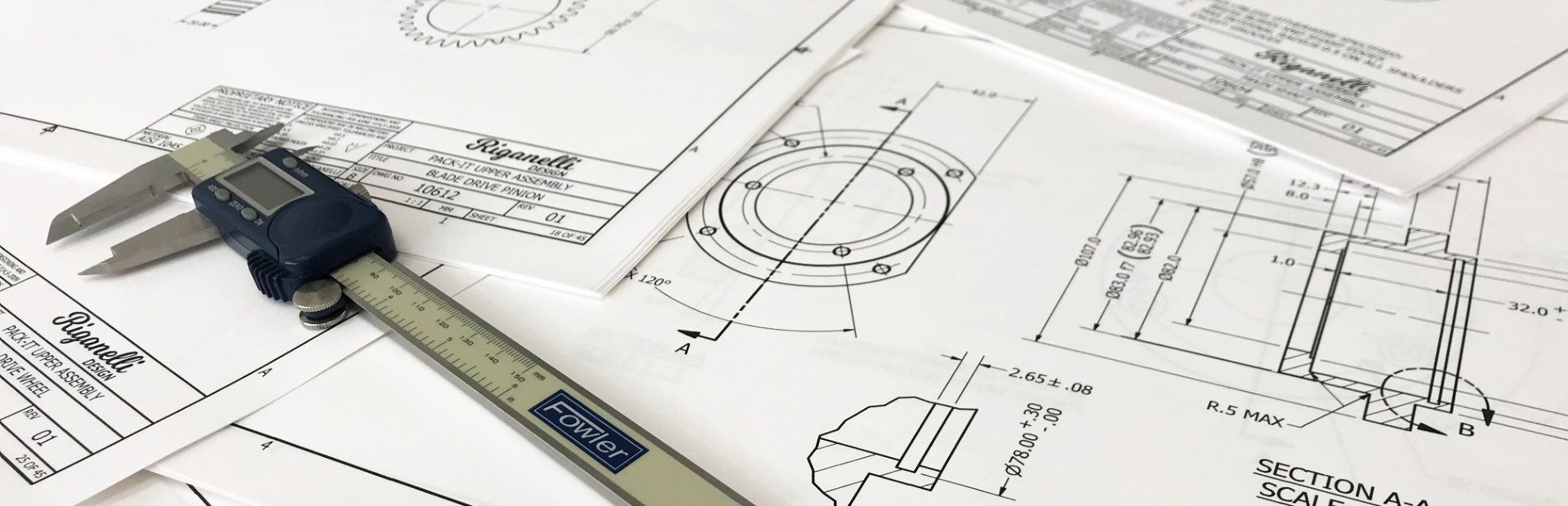
A 3D model is a visual representation of the finished product, but it usually contains no manufacturing information. A proper set of drawings, on the other hand, describes exactly how to make each part — the materials, surface finishes, assembly steps, tolerances, quantities, and much more. Even in today’s digital world, manufacturers universally require a professionally developed drawing package before production can begin.
With modern design tools, a digital 3D model is created first, and the actual design work and problem-solving happens at that stage. Individual part drawings are then generated from the model data, keeping the 2D drawings and 3D model in sync. But the tools alone aren’t enough — an experienced designer is essential to present parts correctly, calculate and note tolerances, specify materials and finishes, and include all the process-specific information a manufacturer needs.
A manufacturing drawing is the primary means of communication between you and your manufacturer. It needs to convey design intent clearly and completely.
When critical information is missing, manufacturers are forced to fill in the gaps using their own standards or past experience. This can lead to parts that don’t interface correctly with other components, or products that don’t meet your performance requirements. If you’ve been through a production run that came back wrong, this is often where the breakdown happened.
A clear, professional drawing eliminates ambiguity. Detailed part drawings combined with a 3D overview give manufacturers the best of both worlds: enough detail to make each part correctly, and visual context to understand the bigger picture. The result is fewer questions, fewer delays, and a manufacturer who’s confident in what they’re building for you.
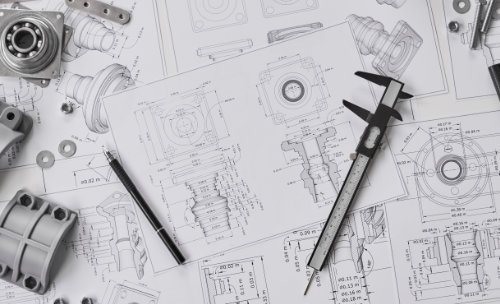
Professional drawings can dramatically reduce manufacturing time and help avoid costly rework.
Consider this scenario: you’ve invested in a product design and you’re eager to get to market. You send the drawings to a manufacturer, but within days the questions start coming in. What material? What finish on this surface? What’s the tolerance on this hole? Each question means a pause in production, and the delays add up fast. Weeks turn into months, and your launch window starts to slip.
When poor drawings are supplied, a manufacturer may need to generate their own shop drawings — a process that introduces significant delays as they work to understand how everything fits together. If they proceed with incomplete drawings instead, the situation is even worse. Parts end up with wrong dimensions, incorrect finishes, improper fits, and other errors that can take weeks or months to correct.
A professional drawing package eliminates this cycle. With clear, complete documentation, manufacturers can quote accurately, start production quickly, and deliver parts that are right the first time.
Quality control is critical to maintaining product conformity and consistency. Manufacturing drawings work hand-in-hand with inspection and test checklists to hold manufacturers accountable and clearly communicate requirements.
When a part requires a specific tolerance — such as when it must fit with other parts or equipment — that tolerance needs to be calculated correctly and listed clearly on the drawing. Once the manufacturer’s QC representative signs off, they’re confirming the part meets those specifications.
Without proper tolerance information, a manufacturer might try to follow every dimension as precisely as possible, driving up costs unnecessarily. Or they might assume critical dimensions are unimportant, leading to expensive rework.
A good designer calculates the most forgiving tolerance for each function, allowing the fastest and most economical manufacture. Unnecessarily tight tolerances — often added by default — create confusion and inflate costs, especially for machined components where extreme precision adds significant time to operations.
Getting dimensions, tolerances, material specifications, finish notes, weld specifications, and assembly instructions right means the manufacturer can optimize their process and deliver reliable results at scale.
A professional drawing package should be universally understood by any qualified manufacturer. If your current supplier produces subpar components, misses deadlines, or raises prices, you can take the same drawings to another manufacturer and continue without interruption.
This is especially important for distributors looking to launch their own product lines. If you’ve been reselling someone else’s product and you’re ready to develop your own, owning a professional drawing package means you — not your supplier — control the product. You can source manufacturing competitively, switch suppliers when needed, and scale production on your terms.
This is also why you should never leave drawing development to your manufacturer. Internally generated drawings can become leverage during negotiations — manufacturers may charge excessive fees for the drawings, claim ownership of the design, or use their proprietary documentation to lock you into the relationship.
When you invest in your own professional drawing package, you maintain full control over your product, your supplier relationships, and your business.
Once a product has been prototyped, changes are inevitable. Your drawing set needs to be updated to capture any modifications required for manufacturing or functionality. Up-to-date drawings are also essential when redesigns are needed after in-field performance reviews, and they save significant time when developing the next version of your product.
A poor drawing set, lost digital files, or an unavailable designer can make it nearly impossible to update a product. In some cases, recreating the entire drawing package is the only path forward.
Investing in professional drawings from the start gives you an expert design and protects you from costly rework down the road.
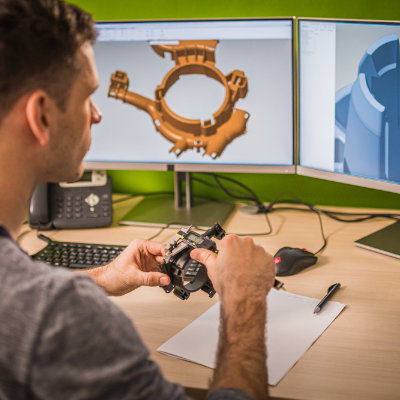
A professional drawing package isn’t the only step in product development, but it’s one of the most impactful. The investment protects you from unmanageable lead times, manufacturing errors, and expensive rework. For many of our clients, getting their drawings right was the turning point that took their product from a source of frustration to a reliable, scalable part of their business.
You bring the product knowledge and industry expertise. We bring the engineering capability to turn that into a drawing package that any manufacturer can work from — accurately, efficiently, and consistently. Whether you’re starting fresh or fixing a drawing set that isn’t working, reach out to Riganelli Engineering. We’ll work with you to build a documentation package that puts you in control and sets your product up for long-term success.