Prototyping
Laser Welding

Precision laser welding for clean, strong joints.

Minimal heat distortion, exceptional cosmetic finish — ideal for thin materials and visible welds.
Laser welding
Why it matters

Clean, precise joins that traditional welding can't match

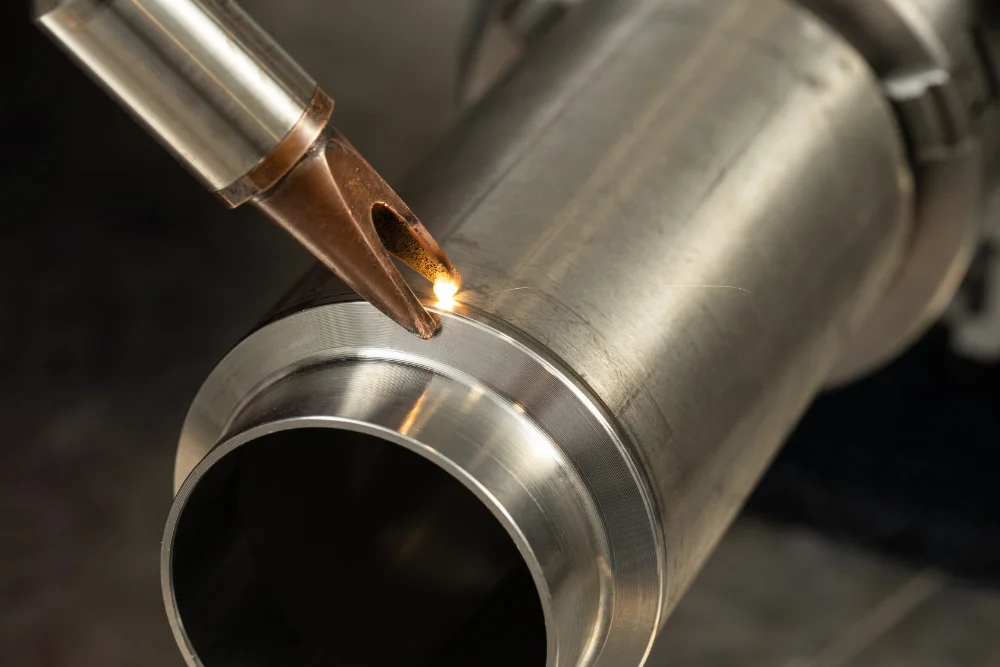
Laser welding delivers what traditional welding methods cannot: clean, precise joins with minimal heat distortion and exceptional cosmetic appearance. For thin sheet metal, delicate assemblies, and products where weld quality is visible to the end user, laser welding produces results that TIG and MIG simply cannot match.
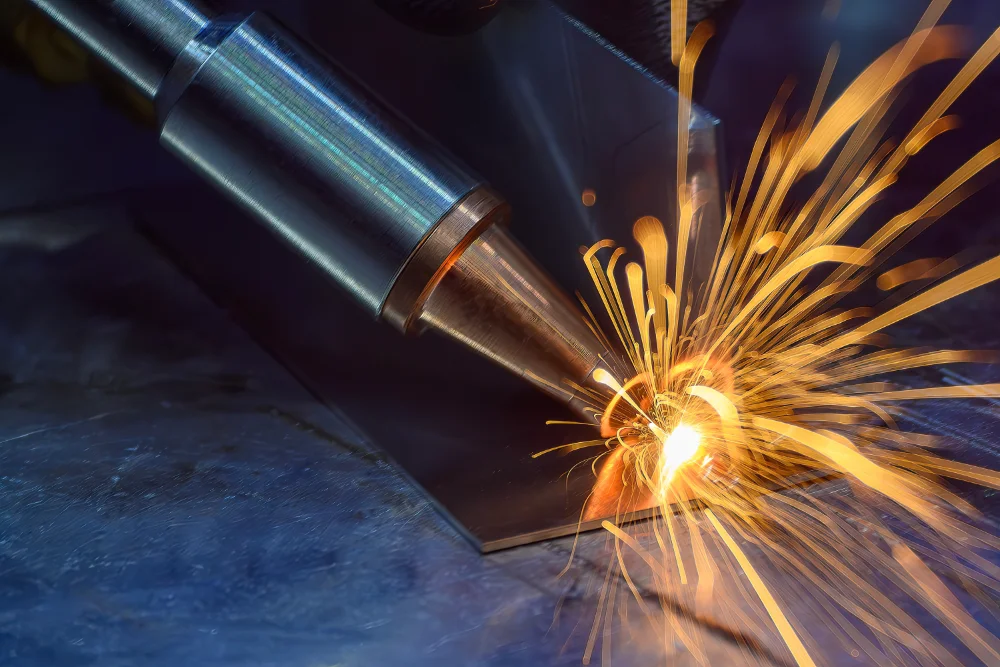
Our laser welder uses a focused beam to create narrow, controlled welds with a small heat-affected zone. This precision minimizes warping and distortion — critical when working with thin materials or assemblies that must maintain tight tolerances. The result is a strong, clean joint that looks as good as it performs.
Minimal heat distortion
The focused laser beam creates a narrow weld with minimal heat input to surrounding material. This prevents the warping and distortion that plague traditional welding methods on thin sheet metal and delicate assemblies. Parts stay flat, dimensions stay accurate, and assemblies maintain their intended geometry.
Minimal heat distortion laser welding
Exceptional cosmetic finish
Laser welds are narrow, precise, and clean — ideal for visible welds on product enclosures, housings, and cosmetic components. The weld bead is minimal and consistent, often requiring little to no post-weld finishing. When appearance matters, laser welding delivers results that represent the final product accurately.
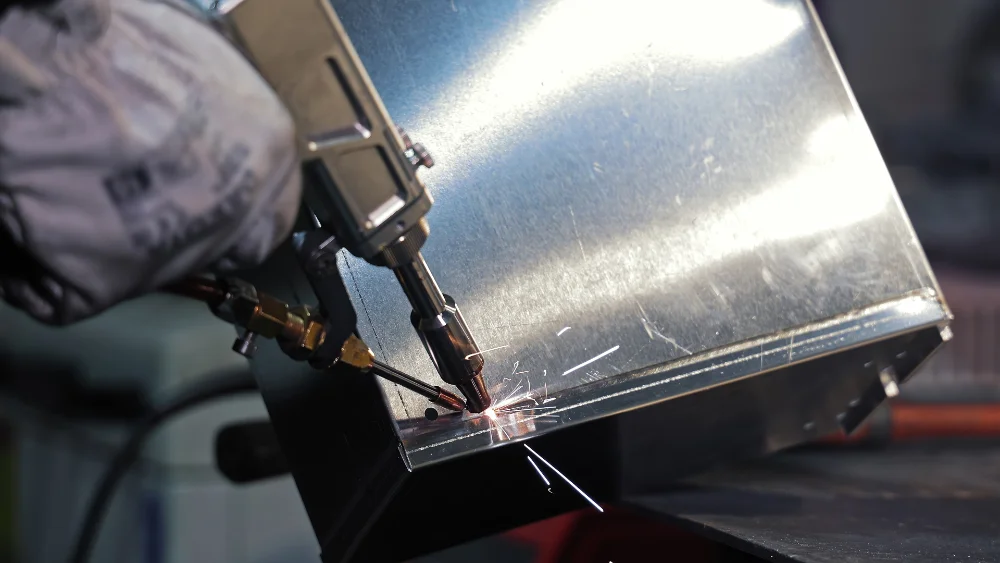
Exceptional cosmetic weld finish
Ideal for thin materials
Traditional TIG and MIG welding struggle with thin sheet metal — heat builds up quickly, causing burn-through and distortion. Laser welding excels in this range, producing strong, clean welds on materials as thin as 0.5 mm without damaging the base material.
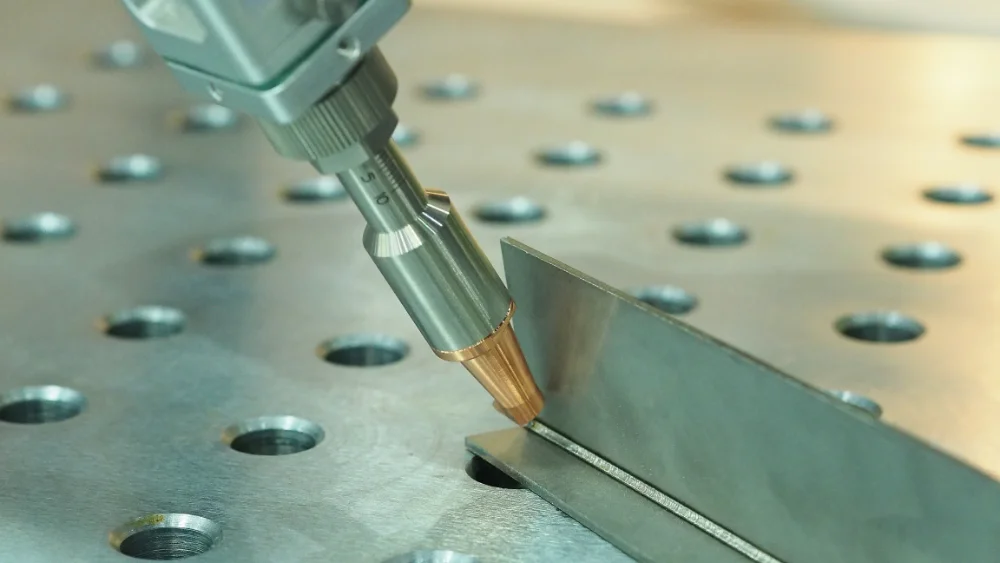
Laser welding thin materials
Strong, reliable joints
Despite the minimal heat input, laser welds are fully penetrated and structurally sound. The narrow fusion zone creates a strong metallurgical bond suitable for functional prototypes and production-representative assemblies that will undergo real-world testing.
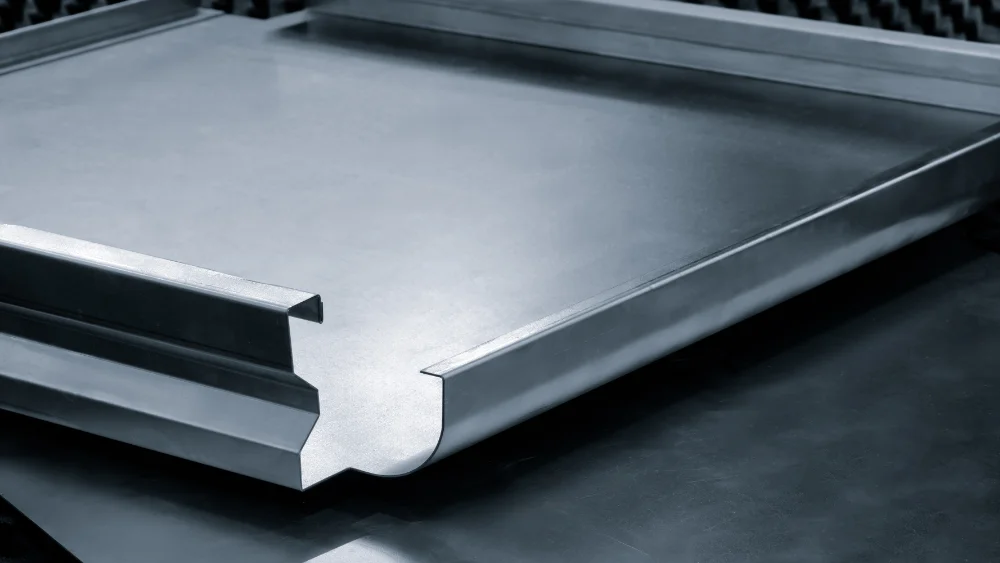
Strong reliable laser welded joints

Equipment and capabilities

Laser Welder

Our laser welding system delivers up to 1,200W of focused energy for precise, controlled welds. The system handles a wide range of metals including carbon steel, stainless steel, aluminum, brass, and copper. Weld seams, spot welds, and tack welds are all achievable with excellent repeatability and control.

Materials

We laser weld carbon steel, stainless steel, aluminum, brass, copper, and other metals commonly used in sheet metal assemblies and product enclosures. Material thickness ranges from 0.5 mm to several millimeters depending on the material and joint configuration.

Complementary Capabilities

Laser welding is part of our complete sheet metal workflow. When laser welding isn't the right fit - thicker materials, structural joints, or dissimilar metals - we have TIG and MIG welding to cover all common metals and joint types. Combined with our dual-source laser cutter (1,380 x 920 mm working area, fiber and CO2 sources) and press brake for bending, we handle complete sheet metal assemblies from flat stock to finished weldment entirely in-house. No coordinating between separate vendors for cutting, forming, and joining.
Prototyping
Applications

Laser welding is ideal for sheet metal enclosures, product housings, thin-wall assemblies, cosmetic components, and any application where heat distortion and weld appearance are critical. It complements our laser cutting and bending capabilities - allowing us to produce complete sheet metal assemblies entirely in-house.

Need precision welding for your prototype?

Tell us about your assembly and we'll plan the welding process.