One of the most expensive mistakes in product development happens before a single part is made: choosing the wrong manufacturing process. We’ve worked with clients who had parts CNC machined that should have been laser cut, enclosures injection molded at volumes too low to justify the tooling, and prototypes 3D printed in materials that couldn’t survive real-world testing. In every case, the product worked - but it cost far more than it needed to.
If you’re developing a product and don’t have an in-house engineering team, the number of manufacturing options can feel overwhelming. CNC machining, sheet metal fabrication, injection molding, casting, extrusion, 3D printing - each has its strengths, and each has situations where it’s clearly the wrong choice. Understanding these trade-offs is one of the most impactful things you can do to control your product’s cost, quality, and timeline.
The manufacturing process you choose for each component directly affects three things: how much each part costs, how long it takes to get parts in hand, and how well those parts perform in your product. Get it right, and your product is cost-competitive, reliable, and ready to scale. Get it wrong, and you’re locked into higher costs or forced to redesign mid-project.
What makes this decision complex is that most products aren’t made with a single process. A typical industrial product might have a welded steel frame, CNC machined mounting features, sheet metal enclosure panels, injection molded plastic covers, aluminum extrusions for structural rails, and 3D printed prototype parts used during development. Each component needs to be matched to the process that best serves its function, volume, and budget.
The key is making these decisions early, during the design phase, when changes are inexpensive. Designing a part for one process and then switching to another often means redesigning the part entirely. A bracket designed for CNC machining looks very different from one designed for sheet metal - and trying to force one into the other drives up cost without adding value.
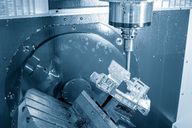
CNC machining is a subtractive process: you start with a solid block of material and cut away everything that isn’t the finished part. This makes it one of the most versatile manufacturing methods available. Nearly any metal or engineering plastic can be machined, and the range of achievable geometries is extremely broad.
CNC machining is the right choice when your part requires tight tolerances, complex 3D geometries, or specific material properties that other processes can’t easily deliver. It excels at producing:
The material range is another major advantage. Aluminum, steel, stainless steel, brass, copper, and engineering plastics like Delrin, nylon, and UHMW are all straightforward to machine. If your product requires a specific material for strength, corrosion resistance, or thermal performance, machining can almost certainly accommodate it.
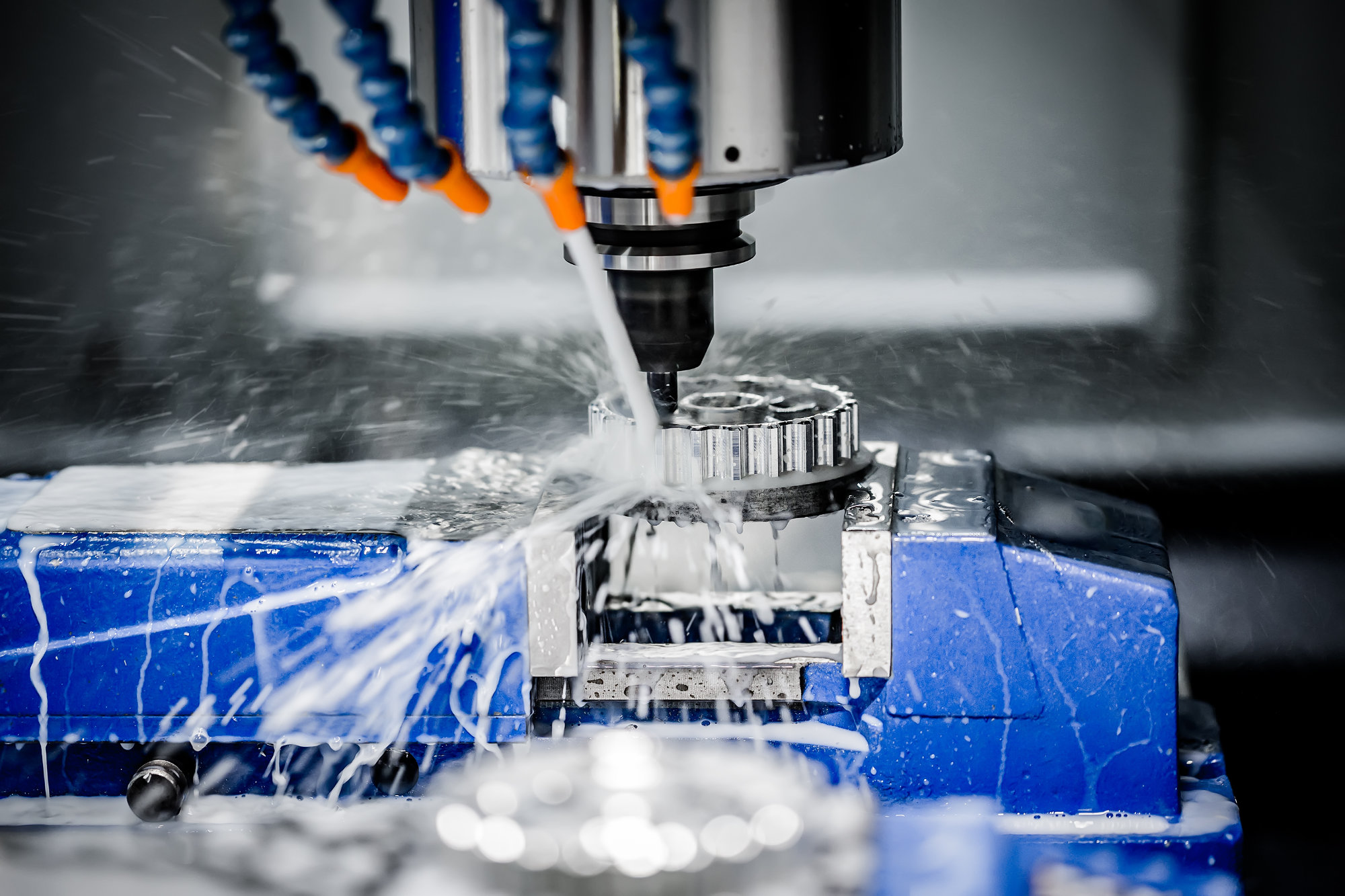
CNC machining has no tooling investment - you don’t need molds, dies, or specialized fixtures to get started. This makes it cost-effective for prototyping and lower volumes. However, because each part is individually cut from raw material, the per-part cost remains relatively constant regardless of quantity. At higher volumes, processes like injection molding or stamping will typically deliver a lower per-unit cost.
The subtractive nature of machining also means material waste. You’re paying for the full block of raw material, even though much of it ends up as chips. For expensive materials like titanium or specialty alloys, this waste factor can be significant.
Sheet metal fabrication involves cutting, bending, and welding flat metal stock into finished components. It’s one of the most cost-effective manufacturing methods for structural and enclosure components, and it’s the backbone of countless industrial products.
If your product includes enclosures, panels, brackets, frames, guards, or structural members, sheet metal is almost certainly part of the conversation. The process is particularly well-suited to:
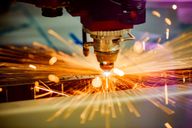
The tooling requirements for sheet metal are minimal. Laser cutting requires no part-specific tooling at all, and bending uses standard press brake tooling for most geometries. This keeps the upfront investment low and makes sheet metal practical for small production runs as well as large ones.
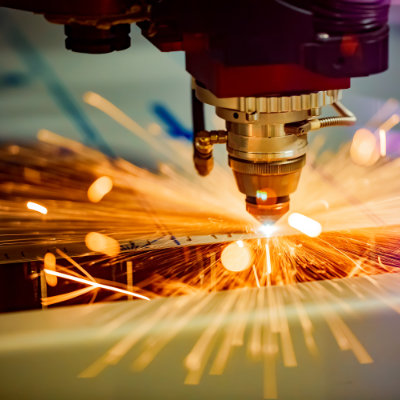
Sheet metal parts are fundamentally formed from flat stock, which creates some geometric limitations. Every feature on the part needs to be achievable through cutting, bending, or welding operations. Complex 3D surfaces that can’t be created by folding flat material will require a different process.
Design details like minimum bend radii, hole-to-edge spacing, and bend-to-feature distances all affect whether a sheet metal part is manufacturable and cost-effective. These are rules that experienced designers apply during the engineering phase so the fabrication shop can produce clean, repeatable parts.
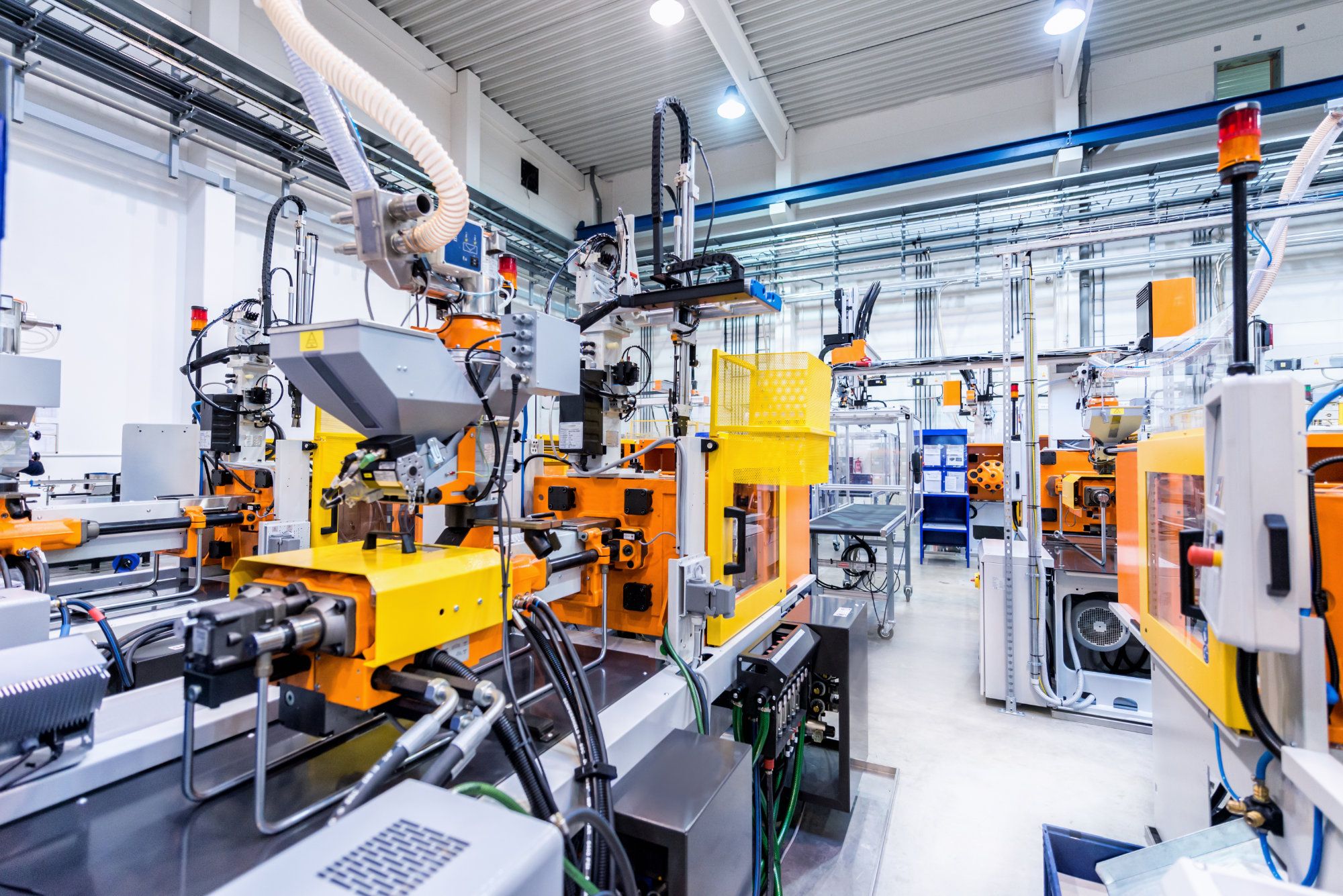
Injection molding produces plastic parts by forcing molten material into a precision mold cavity. When production volumes justify the tooling investment, it delivers the lowest per-part cost for plastic components and produces parts with excellent consistency and repeatability.
Injection molding is the process of choice when you need:
The range of achievable geometries is remarkable. Features that would require multiple machining operations or assembly steps can often be molded as a single part, reducing both cost and complexity.
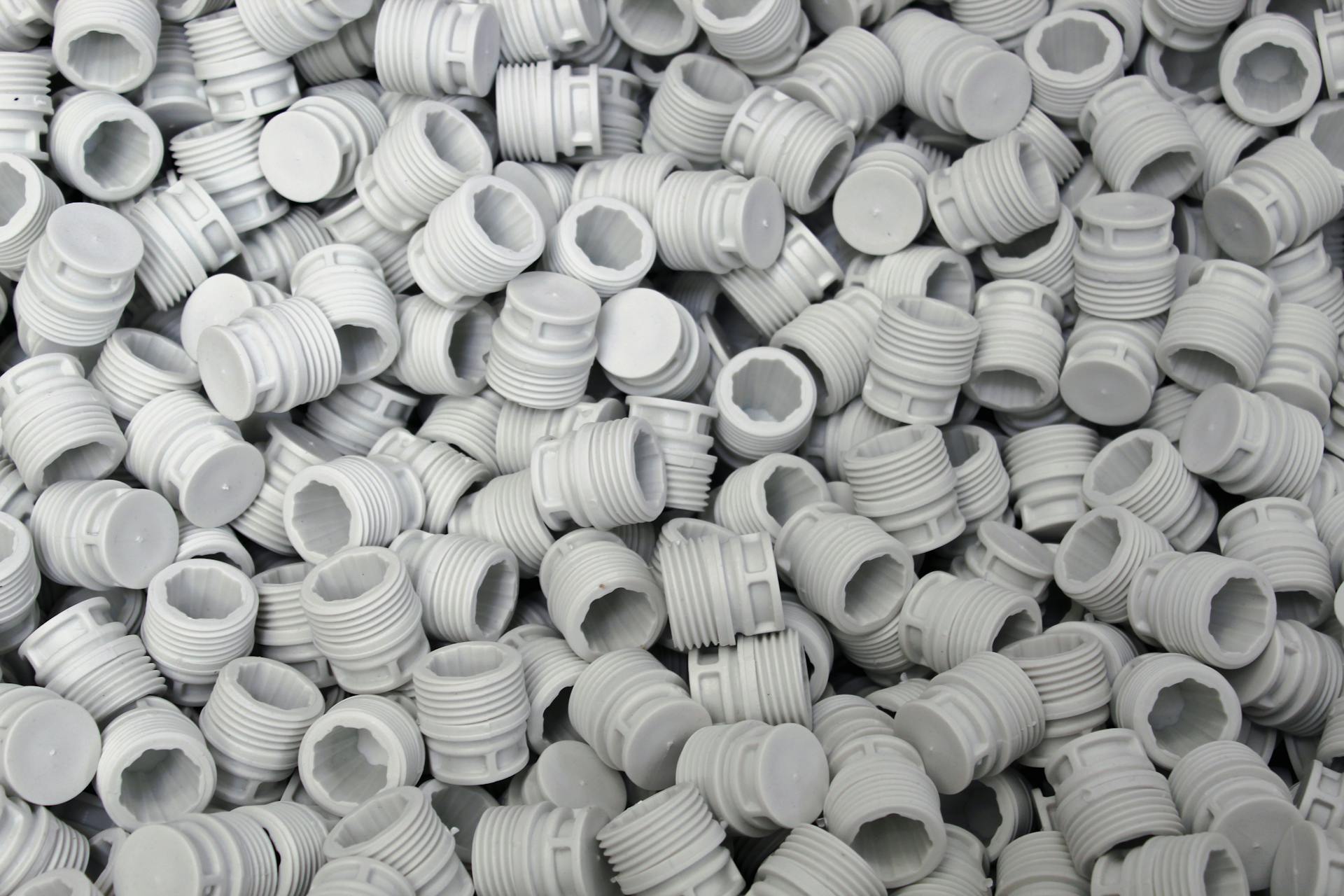
The defining characteristic of injection molding economics is the tooling investment. Production molds are precision-machined from hardened steel and can cost thousands to tens of thousands of dollars depending on complexity. This investment only makes sense when amortized across enough parts to bring the total per-unit cost below alternative methods.
The break-even analysis is straightforward: compare the per-part cost of injection molding (tooling cost divided by expected volume, plus material and cycle cost) against alternatives like machining or 3D printing. For simple parts in moderate volumes, the break-even might be a few hundred units. For complex, multi-cavity molds, it could be tens of thousands.
One effective strategy is to validate your design with prototype molds before committing to production tooling. Molds can be 3D printed or machined from aluminum to produce small batches of real molded parts for testing. This confirms that the part geometry, material, and fit are all correct before you invest in the final steel mold.
Casting produces metal parts by pouring or injecting molten metal into a mold cavity and allowing it to solidify. It’s one of the oldest manufacturing methods, and it remains one of the most effective ways to produce complex metal parts - particularly when machining from solid stock would waste too much material or when the geometry is too complex for fabrication. The right casting method depends on your part’s complexity, volume, surface finish requirements, and budget.
Sand casting uses a pattern to create a mold cavity in compacted sand. Molten metal is poured in, the sand is broken away after cooling, and the rough casting is cleaned up and machined where needed. It’s the most accessible casting method and often the best starting point for metal parts in low to moderate volumes.
Sand casting is well-suited to:
The trade-off is dimensional accuracy. Sand castings have wider tolerances and rougher surfaces than investment or die castings, so parts that need tight fits or smooth finishes will require post-machining. For many industrial applications, though, sand casting delivers strong, functional parts at a fraction of what full machining would cost.
Investment casting (also called lost-wax casting) uses a wax pattern coated in ceramic to create a highly detailed mold. The wax is melted out, molten metal is poured into the ceramic shell, and the shell is broken away to reveal the finished part. The process produces parts with significantly better surface finish and tighter tolerances than sand casting.
Investment casting excels when:
The tooling cost is higher than sand casting because the wax patterns require precision dies, and the process itself is more involved. Investment casting is most cost-effective for small to medium-sized parts in moderate volumes where the geometry or finish requirements justify the additional cost.
Die casting forces molten metal into a reusable steel mold under high pressure. The result is parts with excellent dimensional consistency, smooth surfaces, and fast cycle times. It’s the casting equivalent of injection molding - high tooling cost, but very low per-part cost at volume.
Die casting is the right choice when:
Die casting molds are expensive - often comparable to or exceeding injection mold costs - and are only practical when the volume justifies the investment. But for the right application, die casting produces high-quality metal parts faster and more affordably than any other process at scale.
Extrusion pushes heated material through a shaped die to produce continuous lengths of a uniform cross-section. If you’ve ever seen an aluminum T-slot rail, a plastic trim strip, or a window frame profile, you’ve seen an extruded part. It’s an extremely efficient process for producing long, consistent shapes in both metals and plastics.
Aluminum extrusion is one of the most versatile and cost-effective methods for producing structural and functional components. A heated aluminum billet is forced through a steel die, producing a continuous profile that can be cut to any length. Custom die shapes allow for cross-sections tailored exactly to your product’s requirements.
Common applications include:
The tooling cost for a custom extrusion die is relatively modest compared to casting or injection molds, often making custom profiles practical even at moderate volumes. Standard profiles (T-slot, angle, channel, tube) are available off the shelf with no tooling cost at all.
The key design consideration is that every cross-section along the length of an extruded part is identical. Features that vary along the length - holes, notches, cutouts - are added as secondary operations after extrusion. This makes extrusion ideal for parts with a constant profile but means it can’t replace processes like machining or casting for parts with complex 3D geometry.
Plastic extrusion works on the same principle as aluminum extrusion but uses thermoplastic pellets melted and forced through a die. It produces continuous profiles that are cut or coiled to length. The process is widely used for:
Plastic extrusion tooling is generally less expensive than aluminum extrusion tooling, and the process runs efficiently at high volumes. Like aluminum extrusion, the cross-section is constant along the length, so any features that vary along the part require secondary operations.
For products that need custom seals, gaskets, tubing, or trim profiles, plastic extrusion is often the most cost-effective approach by a wide margin - especially compared to machining or molding individual pieces.
3D printing builds parts layer by layer from digital files, with no tooling or setup required. It’s the fastest path from a CAD model to a physical part, and it plays a critical role in modern product development even when the final product will be manufactured by other methods.
3D printing is the right choice when:
The technology comes in several forms. FDM (fused deposition modelling) produces strong, functional parts in a range of thermoplastics. SLA (stereolithography) delivers exceptional surface finish and fine detail using resins that closely mimic injection molded materials. Each has its strengths, and choosing the right process depends on what the part needs to do.
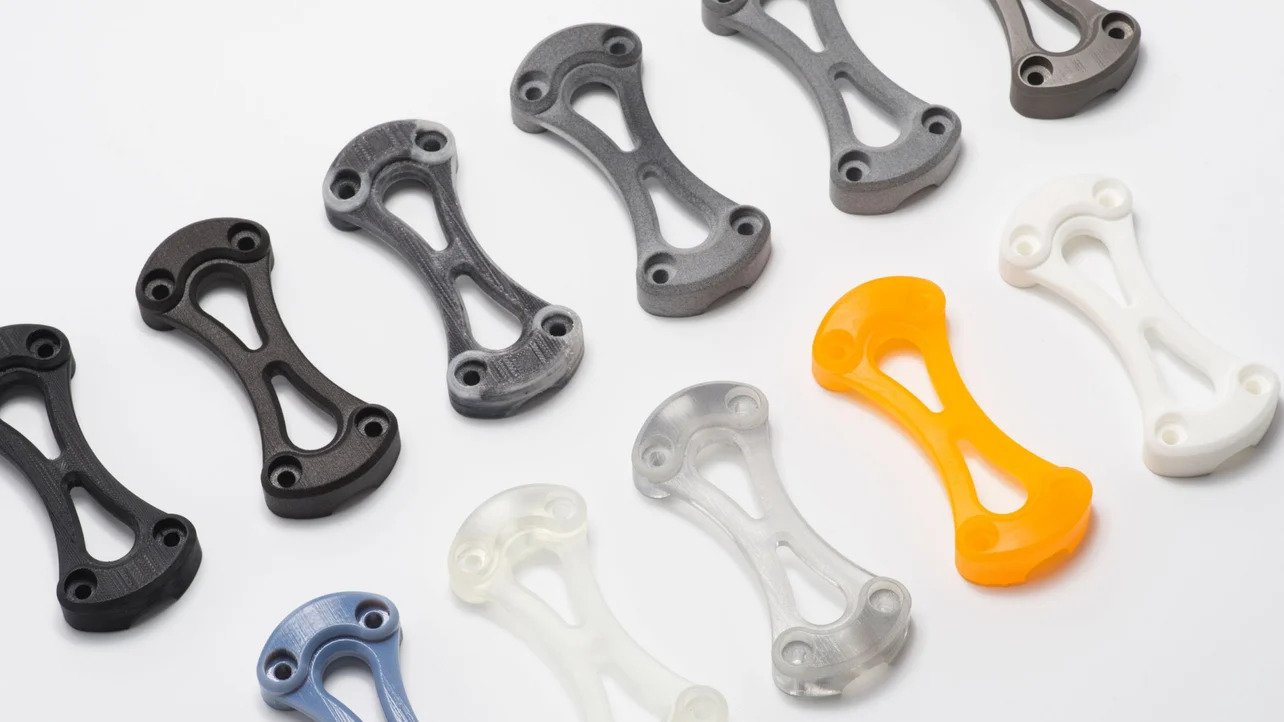
3D printing excels at prototyping and low volumes, but it’s rarely cost-effective for production quantities. The per-part cost remains relatively high compared to molding or fabrication, and build times increase with part size and complexity. Material options, while expanding rapidly, are still more limited than what machining or molding can offer.
Surface finish and dimensional accuracy also vary by process. FDM parts have visible layer lines that may need post-processing for cosmetic applications. SLA parts offer smoother surfaces but can be more brittle depending on the resin. Understanding these trade-offs helps you use 3D printing where it adds the most value without expecting it to replace production processes.
In practice, choosing a manufacturing process is rarely a single decision. Most products use a combination of processes, each matched to the components it serves best. The goal is to find the most cost-effective, reliable process for each part based on a few key factors:
This is where having an independent engineering team adds significant value. A manufacturer will naturally recommend the process they offer. An independent design firm evaluates all available processes objectively and specifies whichever combination delivers the best result for your product. The design is optimized across all manufacturing methods, not just one.
When these decisions are made during the design phase, they’re built into the part geometry from the start. Each component is shaped for the process that will produce it, which eliminates the costly redesigns that happen when process selection is treated as an afterthought.
Manufacturing process selection is one of those decisions that’s easy to overlook and expensive to get wrong. The right combination of processes can mean the difference between a product that’s cost-competitive and one that’s priced out of its own market.
You know your industry, your customers, and the performance your product needs to deliver. We bring the engineering expertise and manufacturing knowledge to translate those requirements into a process strategy that balances cost, quality, and timeline. Together, we develop products that are designed for how they’ll actually be made - not retrofitted to a process after the fact.
If you’re developing a product and want to make sure you’re choosing the right manufacturing approach, reach out to Riganelli Engineering. We’ll help you evaluate your options, optimize the design for production, and build a plan that sets your product up for success.